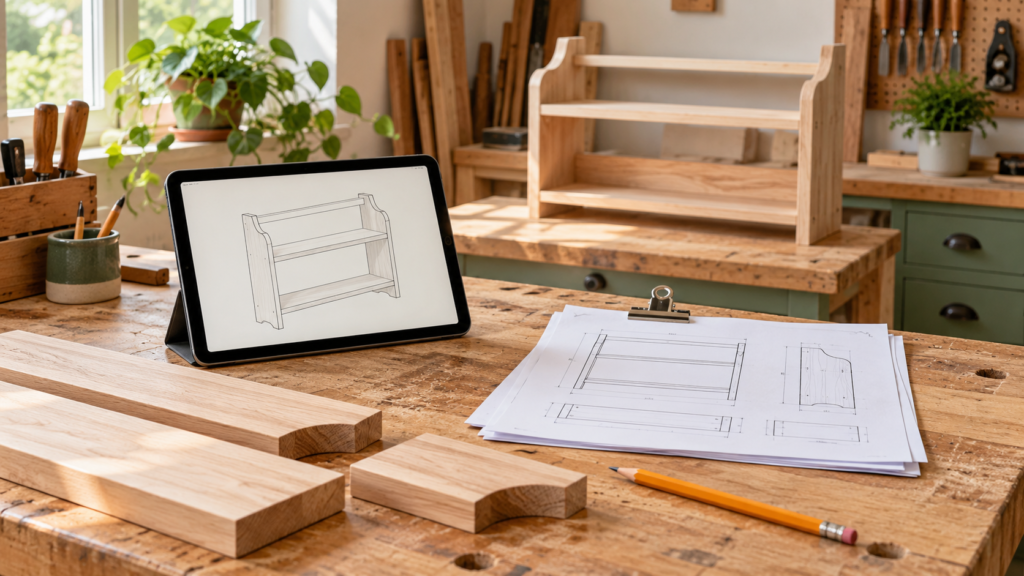
A good free plan can be all you need for a successful project. A paid plan can be worth buying when it gives you clearer instructions, a design you actually want, or help with a problem you cannot confidently solve. When comparing free vs paid woodworking plans, start with the project in front of you rather than the price label.
The useful question is whether you can follow the design from a pile of boards to a finished piece without guessing about important details. This guide explains what to check, how to compare the full project budget, and when paying makes sense. The examples draw on publicly accessible pages; they are not reports of completed builds or tests of purchased plan files.
The Quick Answer: Choose the Plan You Can Actually Follow
Use a free plan if its dimensions, materials, joinery and assembly sequence are clear enough for your skills and tools. Consider a paid option if its preview shows how it fills a specific gap, such as explaining drawer installation or providing a cutting layout. Pause if either option leaves essential measurements or construction details unresolved.
Paying does not automatically remove uncertainty. A polished cover and a long project list say little about the instructions for the one piece you intend to make. Compare the evidence you can see before deciding that one option will save time or prevent wasted materials.
| Your situation | Sensible starting point | What to confirm |
| A straightforward project with complete instructions | A suitable free plan | Parts, dimensions and assembly agree |
| A design with unfamiliar joinery or fitted components | A detailed free or paid plan | The difficult stages are explained |
| A paid preview answers a gap in your free option | Consider the paid plan | The purchased file includes that guidance |
| Neither option explains an essential detail | Ask the author or choose another design | Do not substitute assumptions for answers |
What Are You Paying For?
A free woodworking plan might be a web tutorial with drawings, photographs and a shopping list. A paid woodworking plan might be a downloadable PDF, a course, an individual design or a collection. These labels describe delivery and pricing, but they do not tell you whether the design suits your workshop.
Sometimes the paid offer adds convenience or teaching rather than an entirely different design. Ana White, for example, publishes free project instructions and also lists paid learning resources and PDF bundles in her shop. Check the offer itself: does payment unlock construction detail, easier printing, additional designs or instruction you will use? Separate those benefits before judging value.
Start With the Project, Not the Plan Collection
Write down what the finished piece must do before browsing hundreds of designs. A narrow hallway bench needs different dimensions from a workshop bench, even if both look simple in a photograph. Consider the available space, intended use, materials you can obtain and tools you already know how to operate.
This small brief gives you a fair way to compare options. If you want a compact storage cabinet, a paid collection full of outdoor furniture may offer little practical value. A free design with the right proportions may be a better starting point, provided any changes can be made without leaving the construction unclear. Include practical needs such as storage access and where the piece will stand; a design that meets the measurements can still be inconvenient to use.
- Record the maximum width, depth and height that fit your space.
- Identify any difficult components, such as doors, drawers or unusual joints.
- List your available tools and the operations you can perform confidently.
- Set separate budgets for the plan, materials and any necessary equipment.
- Decide which features matter enough to justify extra work or expense.
When Free Woodworking Plans Are Enough
Free woodworking plans are a sensible first choice when the project is straightforward and the instructions cover what you need. An open shelf, simple organiser or basic workshop fixture may need fewer moving parts and fitting decisions than a cabinet with drawers. That does not make every small project easy; the construction method still matters.
Look for a clear sequence, legible drawings and a materials list you can match to local stock. Builder photographs and comments can reveal questions worth checking, but they do not prove the design is suitable for every use. Choose the free option because it passes your checks, rather than accepting missing detail simply because the download costs nothing.
Are Paid Woodworking Plans Worth It?
Are paid woodworking plans worth it when a free alternative exists? They can be, if the purchased resource answers an important question that the free option leaves open. A clear explanation of a fitted door, a useful exploded drawing or a documented hardware specification may be valuable when those details affect your ability to finish the project.
Ask what you would receive for your money. If the preview is vague and the seller cannot explain the contents, there is little basis for expecting better guidance. Buying woodworking plans makes most sense when you can point to the useful difference, understand the purchase terms and see a realistic path to using the design.
A Woodworking Plan Quality Checklist
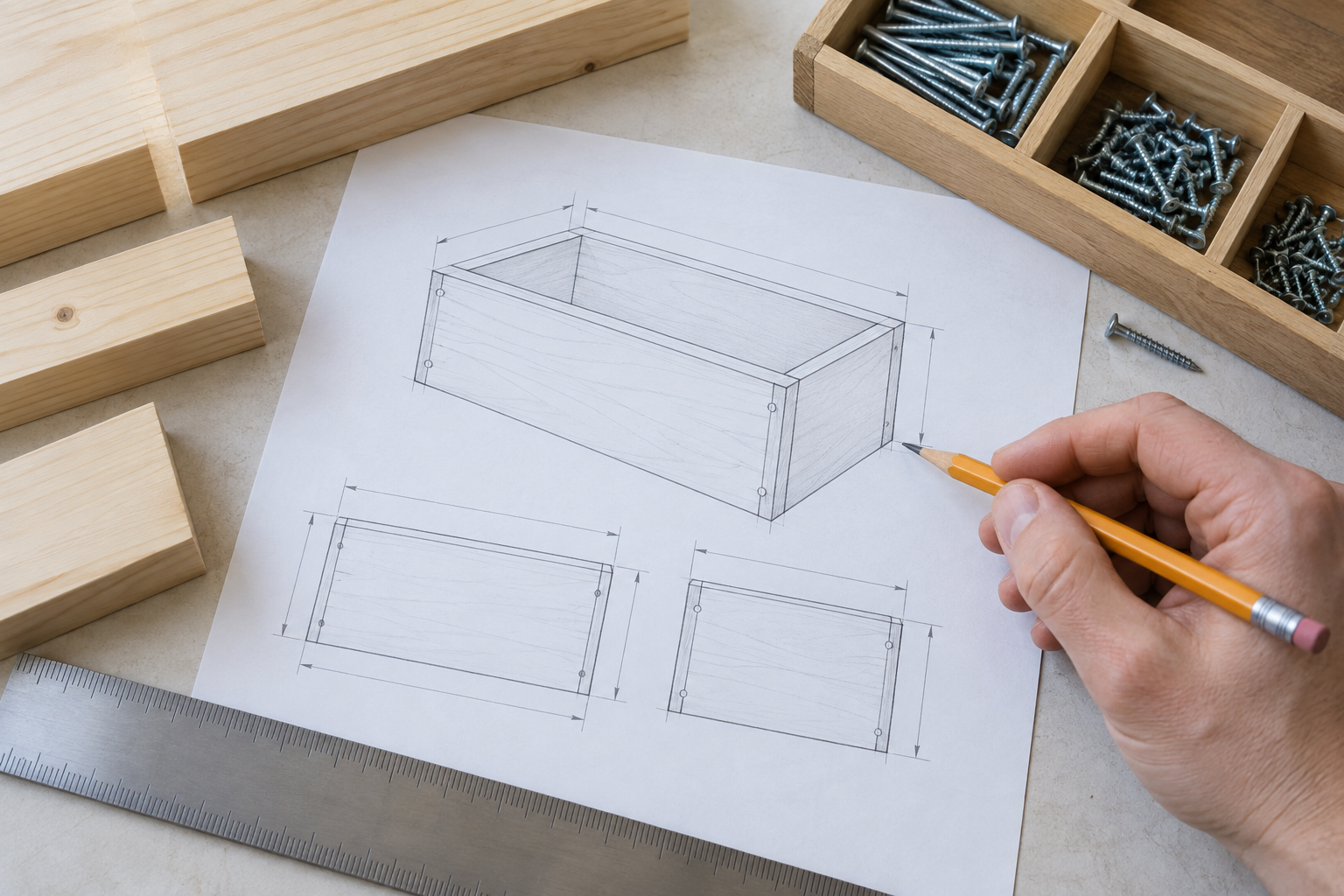
Use the same woodworking plan quality checklist for free and paid options. Start with the finished dimensions, then check how each part connects to the next. A detailed-looking file can still leave a crucial joint unexplained, while a short tutorial can be perfectly adequate for a simpler build. Also check whether the file identifies an author or revision date, so you know where to look for corrections and which version your notes refer to.
Treat the checklist as a way to find questions before spending money or cutting timber. Some gaps can be resolved with one answer from the author; others make the plan unsuitable for your present skills. Instructions should also fit the intended use, especially where stability, loading or specialist construction matters.
| Check | What useful information looks like | What to do if it is missing |
| Dimensions | Finished size and relevant part measurements | Ask for clarification before adapting |
| Materials list | Stock, hardware and quantities are identifiable | Match items to local availability |
| Cut list | Parts are named and sizes agree with drawings | Trace uncertain parts through assembly |
| Joinery | Connections and important fitting steps are explained | Seek suitable instruction or another plan |
| Assembly sequence | Steps show when parts become inaccessible | Read the whole sequence before cutting |
| Tools | Required operations are clear | Confirm your equipment and skill fit |
| Support | Contact route and scope are stated if offered | Do not assume personal help is included |
A Real Example: Check That the Lists and Steps Agree
Ana White’s publicly accessible garage workbench tutorial contains a shopping list, a cut list, drawings and assembly steps. During this research, its shopping list specified 2-1/2-inch self-tapping wood screws, while the first assembly steps referred to 2-3/4-inch screws. That is a specific inconsistency to clarify with the author before choosing hardware, rather than a reason to dismiss all free plans.
The same check applies to paid files. Trace each hardware item from the shopping list into the step where it is used, and compare the measurements. This research inspected the public web page; it did not test the workbench, download every available file or establish which screw specification the author intended.
How to Check a Preview Before Buying
A useful preview lets you follow part of the construction process, rather than showing only the finished furniture. Pick one component and look for its name, dimensions, position and connection to neighbouring parts. If those details are visible and consistent, you have something concrete to assess.
Then examine the stage most likely to challenge you. For a drawer unit, that might be hardware installation and fitting; for a box, it might be the chosen joint. A preview cannot prove that every unseen page is complete, but it can help you ask a precise question. Request a representative sample when the advertised benefits are difficult to verify. Save the description alongside the sample, and distinguish features explicitly included in your purchase from images that merely illustrate the seller’s wider catalogue.
Match Measurements and Materials to Your Local Workshop
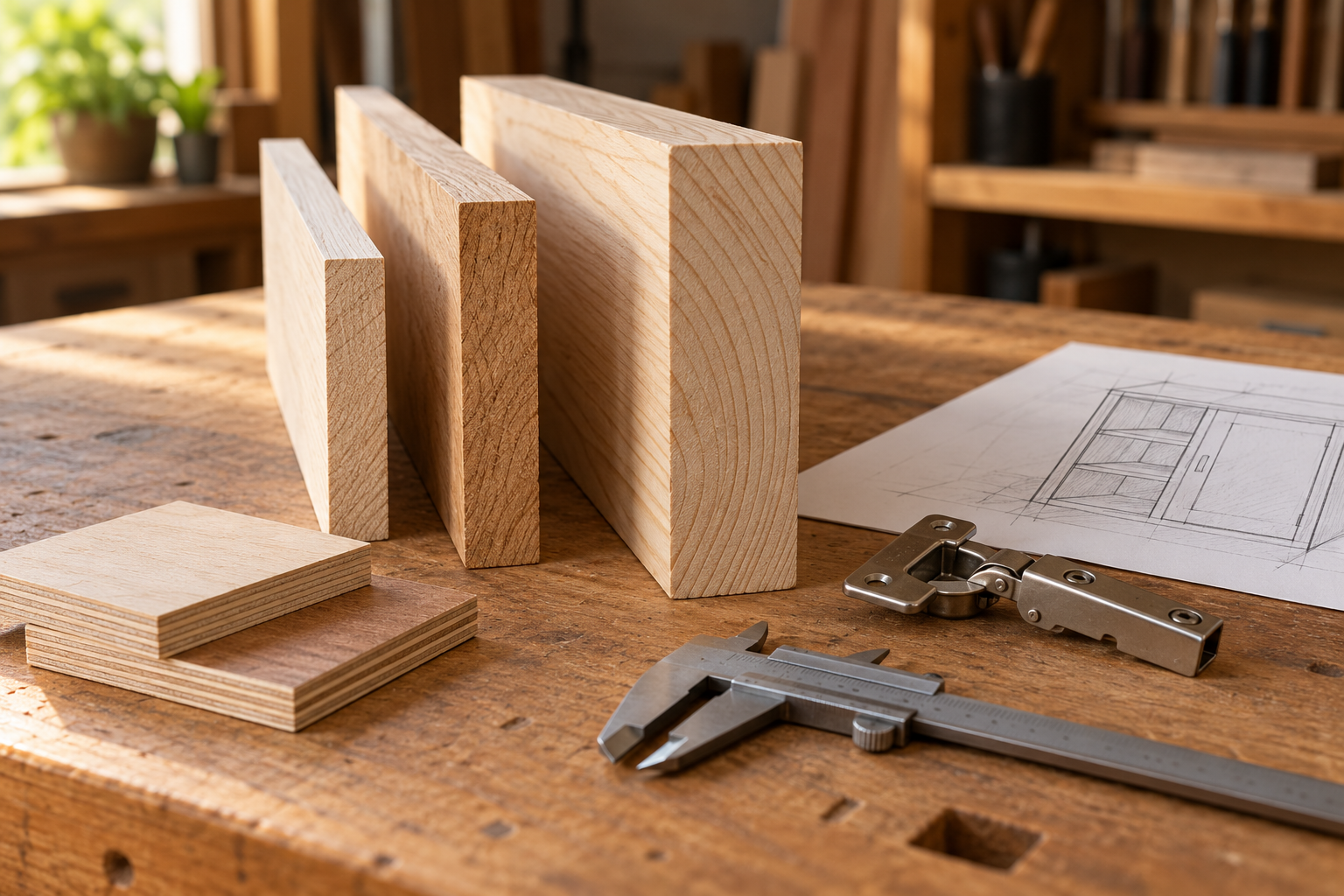
A plan written in inches can be useful in a metric workshop, and the reverse is also true. The practical issue is whether you can obtain the specified stock and maintain the intended fit. Board names, actual thicknesses, sheet sizes and hardware options may differ between suppliers and countries.
Do not change every number independently and expect the parts to fit together. Check relationships between panels, openings, joints and hardware, particularly when substituting stock of a different thickness. If the necessary changes exceed your experience, seek clarification or choose a design using materials you can obtain. Paying for a plan is less helpful if substantial redesign is still required. A local materials check is particularly useful when ordering online, because a familiar trade name may hide a different actual size.
Check the Tools, Skills and Support You Need
A materials list tells you what to buy, but the instructions reveal what you must be able to do. A design may require an accurate groove, a repeated angled cut or a joint you have never made. Read those steps before deciding that the project fits your current workshop.
For unfamiliar terminology and drawings, use our guide on how to read woodworking plans. Follow equipment instructions and arrange appropriate dust control; the UK’s Health and Safety Executive identifies wood dust as a health hazard and recommends controlling it at source. If a paid offer advertises support, check who provides it, how you contact them and what help is included. Ask whether questions about the published design are covered, rather than expecting the author to redesign the piece around different tools or dimensions.
Compare the Total Project Cost
The plan price is only one part of your project budget. Timber, hardware, finish, printing and equipment can matter more than the download fee. Compare free and paid options for the same finished project where possible, so a more elaborate design does not disguise itself as a simple price difference. The example below is hypothetical and uses US dollars for arithmetic only; it is not a supplier quote or a price forecast. Both options assume the same materials and existing tools. The paid version adds a plan fee, so you would need a useful benefit to justify its higher total. No saving from fewer mistakes is assumed.
| Illustrative expense | Free plan | Paid plan |
| Plan purchase | $0 | $18 |
| Timber | $65 | $65 |
| Hardware | $12 | $12 |
| Finish and consumables | $15 | $15 |
| Printing | $3 | $3 |
| Total | $95 | $113 |

A realistic comparison also includes any required equipment you do not own. Reusing existing tools may make either option affordable, while an unfamiliar operation could add a substantial expense. Price that requirement before buying the plan, rather than treating it as a problem to solve after purchase. Keep delivery charges and any applicable checkout additions in your estimate too; a locally available substitute may change the total, but its suitability still needs checking.
Compare a Single Plan With a Paid Bundle
A bundle can offer value if it contains several suitable projects you expect to build. Its headline size is less useful than the number of designs that fit your space, skills and interests. Inspect representative samples and look for a navigable index, rather than assuming you will eventually use everything.
For a hypothetical example, three individual plans costing $12 each would total $36, compared with a $30 bundle. The bundle is cheaper only if its relevant designs provide comparable guidance. If you build just one project, spending $12 on the suitable single plan may be the better decision. Treat those numbers as an illustration, not current product prices. For a personal cost per completed project, divide what you actually spent on plans by the projects you finished using them, rather than the advertised number of designs.
Printing, Downloads and Access Affect Practical Value
Think about how you will use the instructions beside the workbench. A web tutorial may be convenient for browsing, while a clean printable PDF can be easier to annotate and keep with your materials. Check legibility at the size you intend to print, including any diagrams split across pages.
For a paid download, confirm the file format, delivery method and any access restrictions described by the seller. Downloadable files and continued access to an online account are different benefits. Store the files you are permitted to keep and retain your receipt, but do not assume that an advertisement for access guarantees every future update or unlimited personal assistance.
Check Permissions Before Sharing or Selling
Free access does not mean permission to republish a designer’s drawings, distribute the PDF or use another builder’s photographs. Selling a finished item and selling copies of the plan are also different activities. Read the designer’s published conditions and ask when the permission you need is unclear.
Ana White, for example, publishes a policy about building for resale and use of her plans. That policy belongs to her designs; it is not a universal licence for other websites. For either a free or paid resource, keep a copy of the relevant permission and seek clarification before using it commercially or sharing it beyond the allowed scope.
Use a Simple Decision Worksheet
Before you commit, write down the answers to four questions: does the piece meet your needs, are the essential construction details clear, can you perform the required operations, and does the complete project fit your budget? These checks keep free vs paid woodworking plans focused on a build you can realistically finish.
Do not average away a critical missing measurement or an unsuitable construction method just because the other answers look good. Resolve that issue first. This worksheet is a practical decision aid, not a prediction of build success, and it cannot replace appropriate guidance for a specialist project.
- Use the free plan: It meets the four checks and no important construction question remains unresolved.
- Consider paying: A paid sample visibly answers a gap, and its price and conditions fit your budget.
- Ask before choosing: An essential measurement, hardware detail or permission needs clarification.
- Choose another design: Required skills, equipment or material substitutions make either option impractical.
A Sensible First-Project Route for Beginners
Start with one manageable project and learn from completing it. A free plan with clear instructions can help you discover how you use drawings, cut lists and assembly steps before committing to a larger purchase. A paid beginner resource may be useful if it provides the teaching you need, rather than simply adding more designs. Search for beginner woodworking plans that explain the operations involved, and check that any accompanying lessons relate to the project you have chosen.
Keep short notes as you work through the planning stage. Record the time spent understanding instructions, questions you needed answered and supplies that were difficult to obtain.
 Those observations give you a better basis for your next purchase than a general claim that all paid plans are clearer or all free plans are harder to follow.
- Choose a project that fits your available space and current skill level.
- Read its full instructions and mark unclear dimensions or operations.
- Check materials and hardware with your local supplier.
- Clarify important gaps before committing to the build.
- Prepare a complete budget and follow suitable equipment guidance.
- Use your experience to decide whether the next project needs additional instruction.
Where Does Ted’s Woodworking Fit?
A large paid library is one option within this decision, rather than the automatic next step after trying a free plan. Consider whether you want several suitable designs, whether accessible samples answer your questions, and whether the organisation and purchase terms fit how you intend to use the resource.
If that specific product interests you, read our Ted’s Woodworking review and our guide to Ted’s Woodworking cost. Those pages cover the product-specific evaluation and payment questions separately. This comparison does not verify the contents of its paid library or establish that buying it will improve your results.
Choose Useful Instructions Over a Price Label
When comparing free vs paid woodworking plans, choose the option that makes your next project clear, achievable and affordable. Start with suitable free instructions, pay when a verified extra benefit solves a real problem, and wait when an essential construction question remains unanswered.
The most useful plan is one you can understand and use. Check its details, fit it to your workshop and make the purchase decision around the project you intend to complete.
Frequently Asked Questions
Are free woodworking plans good enough for beginners?
They can be if the project and instructions suit your skills. Look for clear measurements, identifiable materials and an assembly sequence you understand. A simple-looking photograph is not enough; check the operations involved and clarify essential gaps before buying supplies or making cuts.
What should a paid woodworking plan include?
It should deliver the information or instruction promised in its offer. For your project, useful details may include dimensions, a cut list, construction drawings and clear assembly steps. Check the sample and description rather than assuming that every paid file includes videos or personal support.
Is a PDF better than a free web tutorial?
A PDF can be easier to print, annotate and use offline, but the format does not guarantee better construction information. Compare the content and legibility. If the web tutorial already covers your needs, payment for a PDF may be a convenience purchase rather than additional guidance. When comparing downloadable woodworking plans, look for readable drawings and useful print layout before giving the format extra weight.
Can I adapt an imperial plan for metric materials?
Often you can, but the available stock and hardware must still fit the design. Converting units alone does not address a change in material thickness or a different fitting system. Check the relationships between parts and ask for help if the necessary adaptation is beyond your experience.
Should I buy a large collection for one project?
Only if the collection gives you a clear benefit over a suitable individual plan. Check that your intended design is included and that representative instructions meet your needs. Additional projects have little immediate value if you cannot use them or would not choose to build them.
Do paid woodworking plans include support?
Some offers include help, while others provide files only. Read the description for the contact route and the scope of assistance. General email access is not necessarily individual project coaching, and an unstated response time should not be treated as a promise. If help is essential to your decision, ask for those details before paying.
Can I sell furniture made from free plans?
Check the designer’s conditions for that particular plan. Permission to build a piece for yourself does not automatically explain every commercial use, and permission to sell a finished item is separate from permission to distribute drawings. Ask the rights holder when your intended use is unclear.
What if the shopping list and assembly steps disagree?
Pause before purchasing the disputed hardware or cutting affected parts. Identify the exact step and measurement, then ask the author for clarification. An unresolved discrepancy can matter in either a free or paid plan, so price should not determine whether you check it.